One of our recent podcast guests, Alex Smith, says the first thing you do, before you make your company and customer stories, is decide, “What is the thing I am trying to change?” If you don’t do that first, he says, you are lost and your stories will go over like lead balloons.
My answer to Alex’s question: Make it easier for people to connect and sell more.
Let me say a bit more about what I mean with that: People pick up bad habits in adulthood because they think those habits are “business-like.” But those habits actually get in the way of connecting with people, and when sales leads at companies discuss their teams, you can usually hear them talking about it.
We typically learn these bad habits between the ages of 18 and 35. At that time, we are learning the technical skills we need for our jobs, which is great, but at the same time we are picking up some really bad habits that will hurt us later on. Then we spend a few years between the ages of 35 and 40 realizing we have picked up these bad habits. The ones who go on to advance in life after 40 are the ones who unlearn those bad habits.
So unlearning the bad habits you picked up between 18 and 35, and relearning the habits you lost when you were a teenager, improves your chances of not spending the second half of your life on a painful plateau.
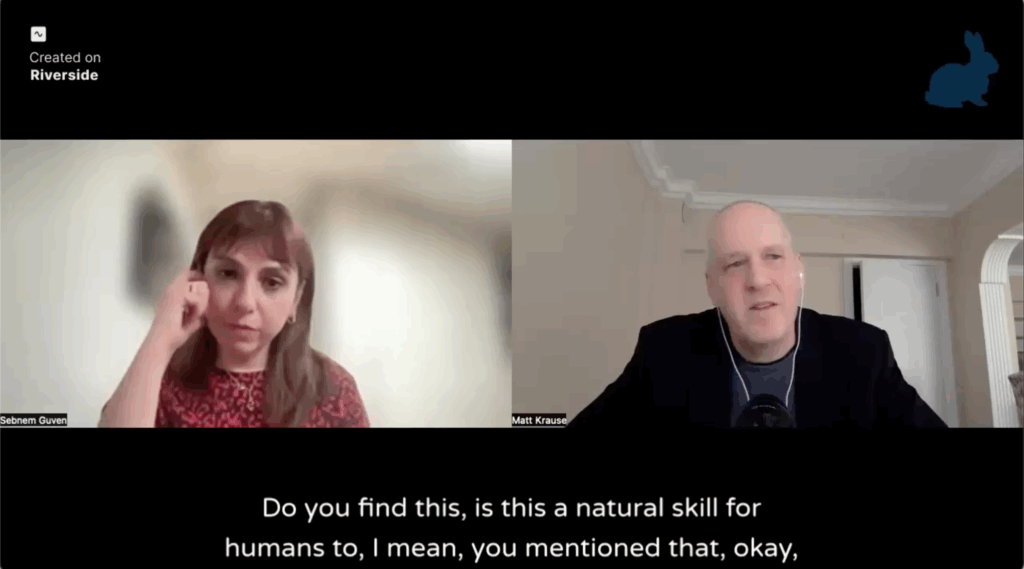
In this, one of my favorite shorts from the podcast’s Şebnem Dağ Güven episode, Şebnem briefly touches on the learning, and then the unlearning, of those bad habits and how she tries to guide her people down the right road.
BTW, I’ve known Şebnem for 18 years, and she has never failed to show that she’s incredibly smart, one of the smartest people I know. So when she speaks, I listen up.