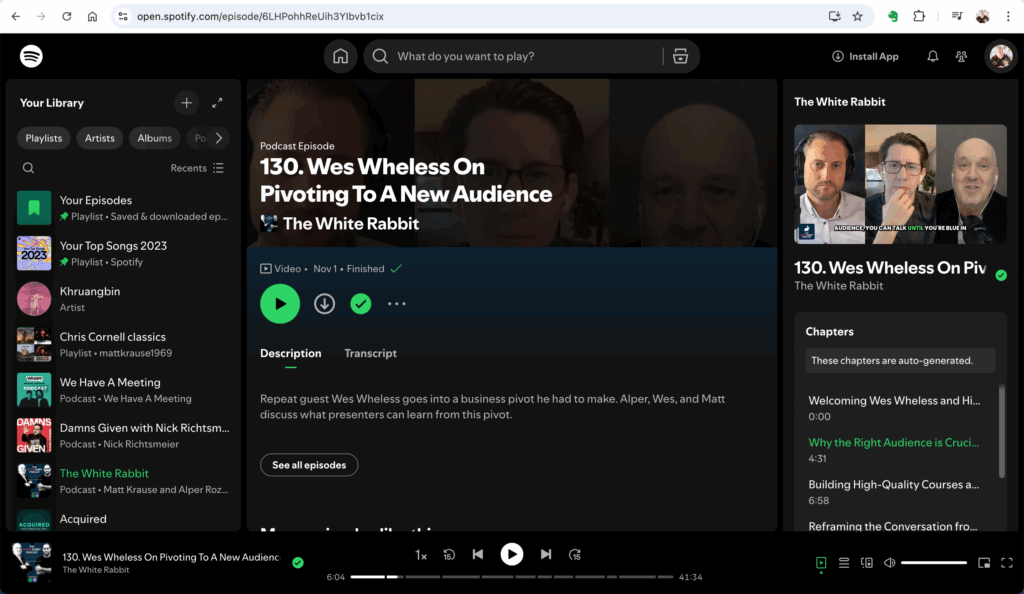
Recently we interviewed a repeat guest on the podcast, Wes Wheless.
I took away many things from that interview, but the main one is this:
Who you talk to is probably the most critically important part of a presention.
You see, we presentation trainers hit on one theme, over and over, and that is the importance of tailoring your message to your audience.
And that’s all nice and good, and I’m not going to go back on that piece of advice. If I did, the International Presentation Training Association would probably call me up and say, “Matt, man, sorry, but you have to cut up your membership card, your membership is cancelled.”
But the thing is, if you make this (“tailor your message to your audience, always”) the end-all-and-be-all of your message, you’re going to bend over backwards serving the tyranny of optimization with something that is bound to fail anyway.
A crappy presentation delivered to the right people is going to go way farther than a rocking presentation delivered to the wrong people.
Here’s what I mean by this:
If you are talking about the company’s strategic direction, and you give an awesome presentation to the company’s line workers, they might say, “That was great, but we can’t do anything about it.” However, if you say the same thing, no matter how poorly you do it, to the company’s board, they might say, “Wow, that’s a good idea, tell us more.”
So when you are presenting about something, part of your pre-game prep needs to be to ask yourself what these people can actually do about what you are talking about.